
Diet by Priyanka
Low-Carb vs Keto: What’s the Difference and Which One Do You Need?
If you have looked into cutting carbs, you have met both words within about five minutes. Low-carb. Keto. They get used as if they mean the same thing. They do not.
The short answer: low-carb is a broad approach, and keto is one strict version of it. Every keto diet is low-carb. Most low-carb eating is not keto.
That difference matters, because stricter is not the same as better.
One note on what this page is. It covers low-carb eating as an approach to weight and everyday health. Ketogenic diets are also used in a medical setting for particular conditions. That is a different subject, and one for a doctor rather than this page.
What is the difference between low-carb and keto?
Both reduce carbs. They differ in how far.
There is no single agreed set of numbers, but these ranges are the ones most often used.
| Approach | Carbs per day | Share of daily energy |
|---|---|---|
| Typical Indian plate | — | 45 per cent and above |
| Moderate | — | 26 to 44 per cent |
| Low-carb | Up to about 130 g | 10 to 25 per cent |
| Keto | About 20 to 50 g | Under 10 per cent |
So the gap is wide. A low-carb plate might still hold a small bowl of rice. A keto plate usually cannot.
There is a second difference people miss. Keto is not only low in carbs. It is high in fat by design, usually around three quarters of what you eat in a day, with protein kept moderate. Low-carb makes no such demand. You can eat low-carb with plenty of protein and a normal amount of fat.
That matters, because keto is often taken as permission to add fat to everything. It is not.
What happens when you cut carbs?
Your body runs mostly on glucose, and most of that comes from carbs.
Eat fewer, and the glucose stored in your muscles and liver falls. Water is held alongside it, so the scale often drops fast in the first week. That early drop is mostly water, not fat. It is why a new diet feels like it is working faster than it really is.
Go low enough for long enough, and your body starts making more ketones from fat. These work as a backup fuel. That state has a name.
What is ketosis?
Ketosis just means those ketones have built up and stayed up.
Two things are worth saying plainly.
First, a low-carb diet does not put you in ketosis by default. Eating 100 g of carbs a day is low-carb. It will not usually get you there. Most people only reach ketosis near the bottom of the keto range.
Second, ketosis is a state your body is in. It is not a result.
Is ketosis the same as burning fat, or losing fat?
No. These are three different things, and they get blurred constantly.
In ketosis your body is using more fat as fuel. That part is true. But using fat as fuel is not the same as losing body fat. You can burn plenty of fat for energy and store just as much back, if you are eating enough to cover what you use.
This has been tested carefully. In one study, men were fed every meal under supervision, first on a normal diet, then switched to a strict keto diet with the calories kept the same. They went into ketosis. Their fat loss did not speed up. If anything it slowed for the first couple of weeks.
So ketosis is not the switch people think it is. What you eat overall still decides the outcome, which is the subject of what calories in versus calories out does and does not explain.
Is keto better than low-carb?
Not by much, and not reliably.
When researchers compare the two with calories kept similar, keto tends to come out slightly ahead, by around a kilogram or so. The people who ran those comparisons were careful to say the effect was small, the trials short, and the finding uncertain.
Over longer periods, the gap tends to close. Past about six months, low-carb approaches and other sensible diets tend to land in much the same place.
Where the two genuinely differ is in daily life.
- Appetite: both tend to reduce hunger. Keto often does it more sharply, which suits some people and unsettles others.
- Food choice: low-carb leaves room for fruit, dal, a little rice or one roti. Keto mostly does not.
- Training: hard, fast efforts often feel worse on very low carbs, at least at first. Steady work tends to be fine.
- Eating out: a low-carb order is easy almost anywhere in India. A keto order is not.
- Sticking with it: this is the one that decides most outcomes.
A plan you follow for a year beats a stricter plan you drop in five weeks. That is not a motivational line. It is the main reason two people on paper-identical diets end up in different places.
Which one might suit you?
There is no rule here, and anyone who hands you one has skipped the part where they ask about you.
A moderate reduction often suits someone who wants to lose weight steadily, trains regularly, eats with family, and does not want a separate menu. It also tends to be easier to hold.
A stricter approach is a tool for particular situations, not a default setting.
Picking a range comes before picking a label. We go through that in how many carbs you actually need.
And if you have cut carbs before and the weight still would not move, the answer is usually somewhere else entirely. We look at that in why weight stalls when you are already eating very little.
What does this look like with Indian food?
This is where the two part company most clearly.
Indian eating is carb-heavy by default. A large national survey put the average at roughly 62 per cent of daily energy from carbs, and it barely varies from one part of the country to another. Rice and roti are not a side dish here. They are the meal.
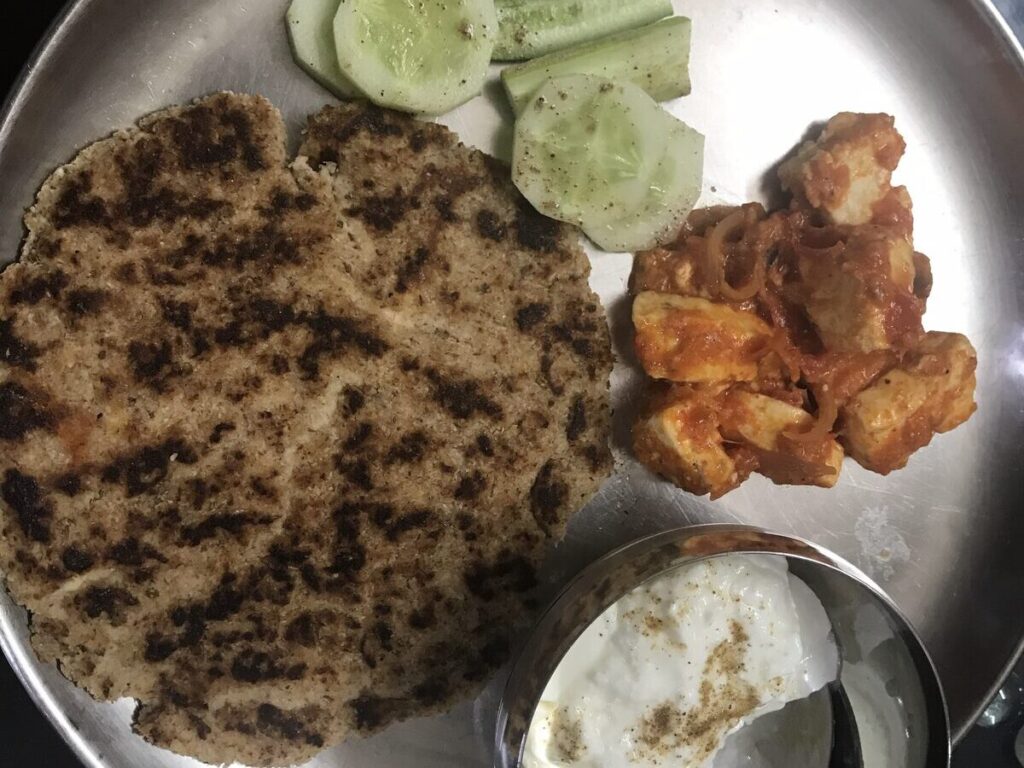
On low-carb, a plate still looks like a plate. One roti instead of three. A smaller serving of rice, or none at that meal. Dal stays. Paneer, eggs, chicken, fish, curd and plenty of vegetables do the filling. Fruit fits, in sensible amounts.
On keto, rice and roti are effectively out. So is most dal, because pulses carry more carbs than people expect. Fruit shrinks to a few berries. The plate becomes paneer, eggs, meat or fish, low-carb vegetables and added fat.
Read those two descriptions and ask which one your household could actually live with. Our recipes are built around the first, with the figures on every dish.
Before you make a big change
If you take any regular medication or have a health condition, speak to your doctor before making a big change to how you eat. Priyanka works alongside your medical care, not in place of it.
Key takeaways
- Every keto diet is low-carb. Most low-carb eating is not keto, and does not need to be.
- Ketosis is a state, not a result. Burning fat for fuel and losing body fat are different things.
- Keto’s edge over other sensible approaches is small, and it tends to fade with time.
- Keto is high-fat by design, which is not the same as unlimited fat.
- The approach you can actually keep will beat the stricter one you drop.
Common questions
Is every low-carb diet a keto diet?
No. Keto is one strict form of low-carb, usually under about 50 g of carbs a day. A diet at 100 g a day is low-carb and will not normally produce ketosis.
How many carbs do you need to eat to get into ketosis?
Most people need to stay near 20 to 50 g a day, and the exact point differs from person to person. Your size, how active you are and what else you eat all shift it, which is why no single number works for everyone.
Is keto better than low-carb for weight loss?
Not clearly. When calories are similar, the difference is small and the research on it is not strong. Longer studies tend to show the two evening out.
Can you lose weight without being in ketosis?
Yes, and most people who lose weight do exactly that. Ketosis is not a requirement.
Where to start
If you are weighing up how far to cut carbs, the useful first step is not picking a side. It is working out what your eating actually looks like now, and what you could sustain.
That is what the Discovery Call is for. Priyanka looks at where you are, and tells you honestly whether a lower-carb approach is worth trying in your case.