
Diet by Priyanka
Dry paneer sabzi with capsicum and tomato
A dry paneer sabzi built on a 500 g block, with capsicum, tomato and 2 tbsp of ghee. The batch serves four, and a serving is about 438 kcal, 24 g protein and 11.5 g net carbohydrate.
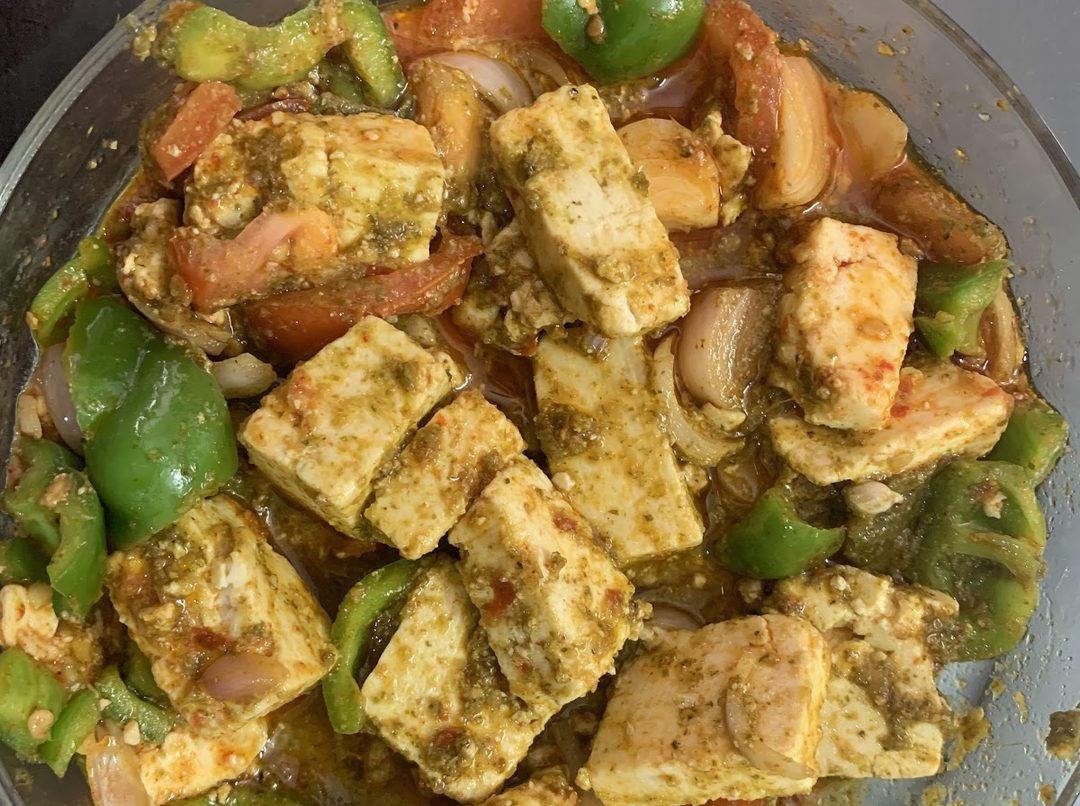
Why this dish works
This is the dish to cook when the week is about to get busy. It keeps three days in the fridge, reheats without going rubbery, and gives you a protein-led sabzi that needs nothing but a roti or a bowl of curd beside it.
There is no gravy, and that is deliberate. Thickened gravies in Indian cooking usually mean onion cooked down, cashew paste or flour, and all three add carbohydrate. Cooking it dry keeps the whole batch at 46 g of net carbohydrate across four servings.
Turmeric is left out. It changes the colour of paneer in a way Priyanka does not like here, and the tomato does the colour work instead.
What you need
Serves 4, from a 500 g block:
- 500 g paneer, cut into 2 cm cubes
- 2 tbsp desi ghee
- 1 large green capsicum, cut into squares
- 2 medium tomatoes, chopped fine
- 1 tsp cumin seeds
- 1 tbsp ginger and garlic, crushed coarse
- 1 to 2 green chillies, slit
- Red chilli powder, coriander powder and garam masala, to taste
- Salt, to taste
- A handful of coriander leaves, chopped
How to make it
Heat the ghee in a wide kadhai and let the cumin seeds crackle. Add the crushed ginger and garlic and the slit chillies, and cook for under a minute, only until the raw smell goes.
Add the chopped tomatoes with the salt and the ground spices. Cook on medium heat until the tomato collapses and the ghee separates at the edges. This takes six to eight minutes and it is the step people cut short.
Add the capsicum squares and stir them through. Keep the heat high enough that they stay firm. Two to three minutes is enough, and they should still have a bite.
Turn the heat down, add the paneer cubes, and fold rather than stir. Cover for two minutes so the paneer takes the masala, then finish with chopped coriander and garam masala. Serve hot.
Nutrition per serving
| Calories | 438 kcal |
|---|---|
| Protein | 24 g |
| Fat | 32 g |
| Net carbohydrate | 11.5 g |
| Fibre | 2.1 g |
A serving is a quarter of the batch. The whole batch comes to 1,750 kcal, 96 g protein, 128 g fat and 46 g net carbohydrate, calculated on 500 g of paneer and 2 tbsp of ghee. Capsicum and tomato account for almost all of the carbohydrate, so a heavier hand with either moves the figure.
Who this suits
Twenty four grams of protein per serving from a vegetarian dish is hard to beat, which puts this on most muscle gain and vegetarian plans.
Paneer is high in fat as well as protein. On a fatty liver plan the portion matters more than the ingredient, so ask before making this a daily dish.
Have a question about this recipe?
Priyanka answers WhatsApp herself. Ask about ingredient swaps, portion size, or whether this dish suits what you are working on:
There is no charge for a question, and you will be talking to Priyanka, not an assistant.
More from Priyanka’s kitchen
Every published recipe is listed on the low-carb recipes page, with macronutrients listed for each.
If this one worked for you, these are close cousins from the same plans:
- Paneer bhurji plate with raita and chutney
- Ghee-sauteed vegetables with paneer and cheese
- Grilled paneer with broccoli and capsicum
- Keto roti with paneer tikka masala
Recipes work best inside a plan built around your history and your routine. To start there, book a Discovery Call with Priyanka.
These meals come from the same plans Priyanka builds for PCOS, thyroid, prediabetes and fatty liver support.
Written by Priyanka Chanana, nutritionist, practising since 2021. Nutrition support runs alongside medical care rather than replacing it.